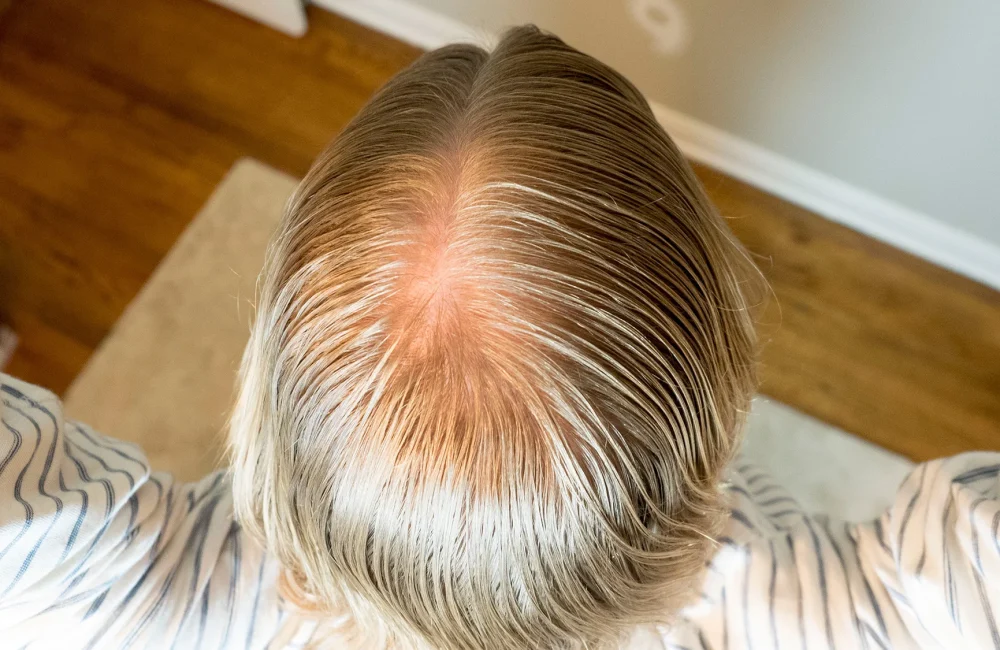
The right hair-loss treatment depends on the cause. A gradually receding hairline, sudden shedding, and patchy loss should not automatically receive the same plan. Start with an assessment before choosing a procedure from a before-and-after photo.
Medication options need a diagnosis
The American Academy of Dermatology describes topical minoxidil and prescription finasteride for male pattern hair loss. They are not interchangeable with treatment for every kind of shedding. Ask about suitability, adverse effects, how long an adequate trial takes, and the need for continued use to maintain benefit.
What about PRP and other procedures?
PRP uses a preparation from a patient’s own blood. The same AAD overview discusses it as an option for some patients, with repeat treatments and variable results. A procedure involving growth factors under another product name is not automatically equivalent to PRP. Ask for evidence for the exact product and method.
Our PDGF evidence review explains why a laboratory study alone cannot establish reliable results for a particular scalp treatment.
Use a fair way to assess progress
- Take photographs with consistent lighting, angle, hairstyle, and hair length where practical.
- Agree on what the treatment is intended to change.
- Understand the review timeline and maintenance requirements.
- Ask what happens if the plan does not help or causes problems.
Treat supplement claims carefully
A supplement should address a defensible need, rather than be added automatically to every hair plan. Bring existing products to the consultation so ingredients and potential overlaps can be reviewed. Sudden, painful, inflamed, or patchy loss may require a dermatology assessment.
For preparation before your first assessment, read what to do when you first notice thinning. To discuss hair-restoration consultation options at Lux Men’s Club in Chicago, schedule a private consultation. Confirm which options are appropriate and available before assuming a particular medicine or procedure is offered.